
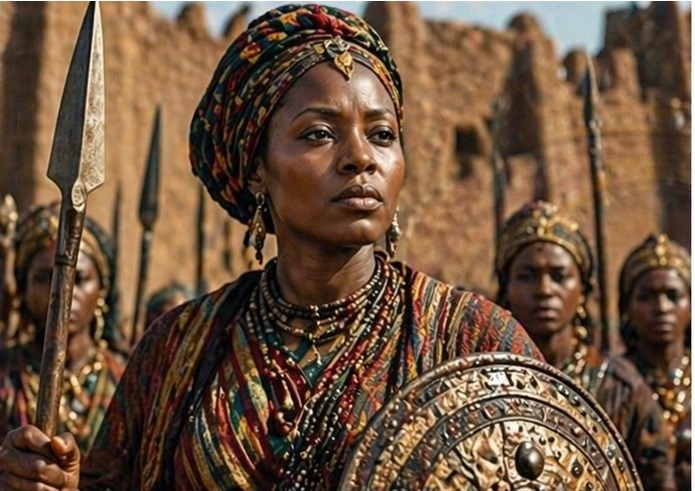
Queen Amina of Zaria is one of the most legendary female rulers in African history. She lived in the 16th century in what is now northern Nigeria and ruled the Hausa city-state of Zazzau, modern Zaria in Kaduna State. Known for her bravery, military brilliance, and expansion of trade routes, Amina became a symbol of power and leadership. Her story combines history, legend, and the oral traditions preserved by Hausa storytellers.
Birth and Early Life
Around 1533, Amina was born into the royal family of Zazzau. Her mother was Queen Bakwa Turunku, a respected ruler who governed the prosperous Hausa city-state. From a young age, Amina showed qualities different from most royal children, she loved military training, preferred horse riding and weapons practice, and followed soldiers to learn battle tactics.
While many expected her to live a quiet royal life, Amina spent her youth watching warriors train and studying strategy. According to Hausa oral traditions, she was fearless, disciplined, and highly intelligent.
Training as a Warrior
When Amina became a teenager, she began formal military training, learning horseback combat, sword fighting, spear throwing, and military leadership. Her brother Karama became king after their mother died, and during his reign Amina served as a military commander, reportedly leading thousands of soldiers in battle.
These years gave her battlefield experience, the respect of warriors, and a reputation as a strong leader. By the time she was an adult, Amina was already known across the region as a fearless princess-warrior.
Becoming Queen
When King Karama died around 1576, Amina became the ruler of Zazzau. Her coronation surprised some, as female rulers were rare in the region, but Amina had already proven her strength in war, and the army supported her. Once crowned, she made her intention clear: she would expand the kingdom of Zazzau through conquest and control of trade routes.
The Military Campaigns
Queen Amina quickly began leading military campaigns across Hausa lands and neighbouring regions. Her army reportedly consisted of 20,000 soldiers, and she personally led troops into battle while riding a horse and carrying weapons. Her campaigns lasted more than 30 years, extending into Nupe lands, parts of Kano, areas toward the Niger River, and trade routes connecting northern and southern regions.
During this period, Zazzau became one of the most powerful Hausa states. Trade expanded significantly, and the kingdom controlled important commercial routes across the region.
Amina's Walls
One of Queen Amina's greatest achievements was building fortified city walls around conquered territories. These walls became known as Ganuwar Amina - Amina's Walls. They served to protect against enemy attacks, mark territory of the Zazzau kingdom, and control trade routes. Many Hausa cities later adopted the same idea of large defensive walls, and even today remnants of these structures still exist in parts of northern Nigeria.
Trade and Economic Power
Queen Amina understood that power was not only about war but also trade. During her reign, trade routes expanded across the Sahara, Zazzau became a major commercial hub, and merchants traded gold, leather, kola nuts, and other goods. Her control of trade routes made the kingdom wealthy and influential across the region.
Legends Surrounding Her Life
Because much of her story comes from oral tradition, many legends surround her life. Some say she never married and dedicated her life entirely to ruling and warfare. Others tell that after conquering a city, she would spend one night with a warrior and then send him away so no one could claim power over her. She was considered nearly unbeatable in battle.
Historians believe some of these stories were exaggerated over time, but they reflect the depth of her reputation, a powerful, independent ruler who answered to no one.
Death of the Warrior Queen
Queen Amina reportedly died around 1610 during a military campaign, in a region near present-day Atagara. By the time of her death, Zazzau had expanded greatly, she had ruled for about 34 years, and her legacy had spread across Hausa lands and far beyond.
Her Legacy
Queen Amina remains one of the most celebrated female leaders in African history. She proved that women could lead armies and rule powerful kingdoms. She strengthened commercial networks across West Africa. And she became an enduring symbol of strength, courage, and independence in Nigerian history, a legacy that lives on in the oral traditions, the ruins of her walls, and the hearts of those who tell her story.
At Artminds and Decor, stories like Amina's are part of why we do what we do. African heritage is not just history, it is living, breathing identity. Every piece we craft is a tribute to the people, rulers, warriors, and storytellers who came before us.
← Back to Blog